


January 26–28, 2026 | Austin Marriott Downtown, Austin, TX
The 2026 MEP Innovation Conference brought together contractors, technology leaders, and industry executives from across the mechanical, electrical, plumbing, and sheet metal trades for three packed days in Austin, Texas. Hosted jointly by MCAA, NECA, and SMACNA, the three heavyweights of the MEP world, this year’s event made one thing unmistakably clear: the industry is no longer debating whether to modernize. The conversation has shifted decisively to how fast firms can scale proven workflows without burning out their teams or blowing their margins.
Here are the biggest trends and takeaways from the conference.
1. The Data Center Boom Is Reshaping MEP Construction
If there was one topic dominating hallway conversations and general sessions alike, it was data centers. The explosive growth of AI infrastructure and cloud computing has ignited one of the largest building surges in modern construction history, and MEP contractors are right at the heart of it.
The general session “Scaling Up: Inside the Data Center Construction Surge” led by Rick Gopffarth of Dynamic Systems, Inc. (DSI) and Adam Snavely of The Poole and Kent Corporation, brought in leaders from the largest data center owners to tackle the toughest challenges head-on: accelerated schedules, labor strain, workforce burnout, and the rising reliance on modularization.
Perhaps most intriguingly, the session looked ahead to emerging design trends reshaping data center MEP work, particularly the shift from traditional air-cooled systems to liquid-cooled chipsets and microfluidic systems. For sheet metal, mechanical, and electrical contractors, this isn’t a distant future, it’s an active market evolution that demands new fabrication and installation capabilities right now.
Key takeaway: Data centers represent a massive and growing revenue opportunity for MEP contractors, but capturing it requires investment in modular prefabrication, labor capacity planning, and familiarity with next-generation cooling technologies.
2. Fabrication Has Graduated from Support Function to Strategic Advantage
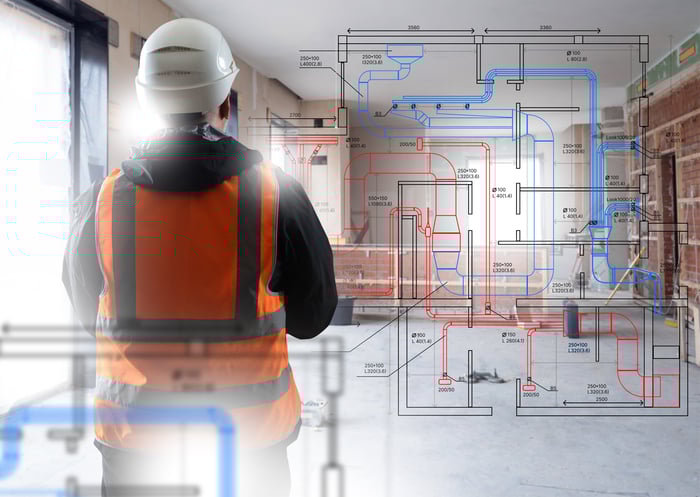
One of the clearest through-lines at this year’s conference was the elevation of fabrication as a competitive differentiator, not just a back-office support function. The firms pulling ahead, across session after session, shared a common operating principle: they had built a single, fabrication-centered source of truth that drives decisions from the BIM model all the way through to field installation.
The industry’s best performers aren’t chasing the latest tool. They’re building connected operating models where BIM, fabrication shop, and field execution are seamlessly linked. Contractors who have made this shift are winning because they can deliver repeatable results at scale, without quality slipping and without heroics from individual project managers.
Sessions and exhibitor demos alike demonstrated how reactive hangers that adapt to design changes, automated field point detection, and simultaneous MEP system modeling are compressing timelines and reducing costly field errors.
Key takeaway: Fabrication-first thinking is the new baseline for high-growth MEP firms. Contractors who treat fabrication as a strategic control point, not an afterthought, are outpacing their peers on productivity, profitability, and project delivery.
3. Data Analytics Is Transforming Daily Decision-Making
The 2026 conference placed significant emphasis on how data-informed approaches are reshaping contractor operations from the top floor to the shop floor. A dedicated general session on analytics, featuring live polling to capture real-time benchmarking from attendees explored how contractors are turning fragmented operational data into practical, actionable insight.
The message was consistent: the companies pulling ahead aren’t necessarily the ones with the most data. They’re the ones using data to understand performance trends, identify workflow bottlenecks early, and make better decisions at every level of their organization.
McKinstry’s session offered a particularly compelling case study, sharing how data analytics helped them define a baseline standard of VDC detailing that can be right-sized to each project’s specific parameters, maximizing value without over-engineering the process.
Key takeaway: Analytics isn’t just for large enterprises. Contractors of all sizes are finding competitive advantage by structuring their operational data and using it to guide decisions in real time.
4. Prefabrication and Off-Site Manufacturing Are Reshaping Project Delivery
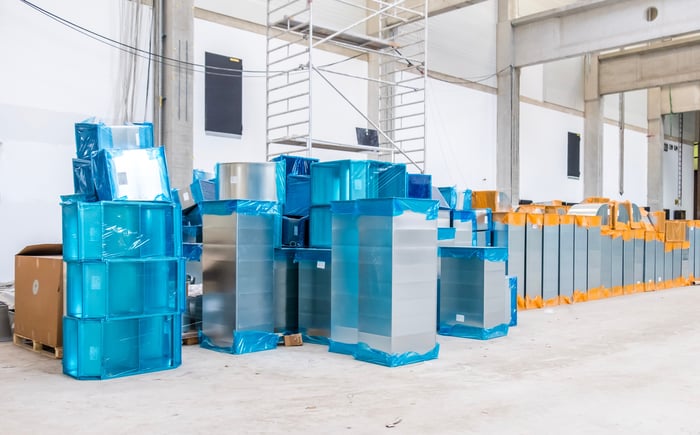
Off-site manufacturing and prefabrication continued to gain serious momentum at this year’s conference, with multiple sessions exploring how industrialized construction is fundamentally changing how MEP projects get delivered.
The framing has shifted. Prefabrication is no longer a niche strategy for specialized contractors, it’s becoming a mainstream competitive necessity, especially as project schedules tighten and skilled labor remains scarce. Contractors who have built out prefabrication capabilities report significant gains in quality consistency, schedule reliability, and crew efficiency.
Key takeaway: MEP firms that haven’t yet developed a prefabrication strategy should treat it as an urgent priority. The gap between prefab-capable firms and those without is widening quickly.
5. Service Is Becoming a Technology-Driven Business
For many years, the service side of mechanical contracting operated largely on relationship, reputation, and experience. That’s changing fast. This year’s conference gave more dedicated attention to service than in prior years, reflecting the growing role technology plays in how contractors manage service agreements, dispatch technicians, and build recurring revenue.
Forward-thinking service contractors are using technology to tighten dispatch operations, speed up quoting, improve field documentation, and build more consistent preventive maintenance programs. The firms winning in service aren’t just good at showing up, they’re using data and software to make their operations more predictable, profitable, and scalable.
Key takeaway: Service is no longer separable from technology strategy. Contractors who invest in the systems that support their service operations will outpace those running on legacy processes and tribal knowledge.
6. Leadership, Culture, and Innovation Mindset Got Their Due
Beyond the technical content, the 2026 conference made room for a critically important conversation: how do you build an organizational culture that can actually absorb and sustain innovation?
An interactive leadership workshop used hands-on creative challenges, think spaghetti tower-style exercises, to surface the leadership behaviors needed to foster experimentation, build team trust, and guide organizations from chaotic ideation to reliable execution. Attendees walked away with practical strategies for building cultures of ownership and resilience, not just awareness of new tools.
A peer group-building session also resonated strongly, reinforcing the idea that the best MEP leaders don’t grow in isolation, they grow through structured accountability with peers who challenge their assumptions and push their thinking.
Key takeaway: Technology adoption is ultimately a people and culture problem. Firms that invest in leadership development alongside their tech stack will scale innovation more effectively than those treating it as purely a tools challenge.
Final Thoughts
The 2026 MEP Innovation Conference reinforced something that the industry’s best firms already know: the future of MEP contracting is structured, connected, and fabrication-first. The contractors who are thriving aren’t chasing every new tool, they’re building disciplined operating models where BIM, fabrication, and field execution are unified, data drives decisions, and their people are set up to succeed.
Austin delivered the right environment for these conversations, a city built on creative energy and forward-thinking ambition. For those who attended, the challenge now is bringing these ideas back to their organizations and putting them into practice. For those who missed it, mark your calendars: the MEP Innovation Conference continues to set the standard for what a contractor technology event can and should be.